The method
What is Structural Integration?
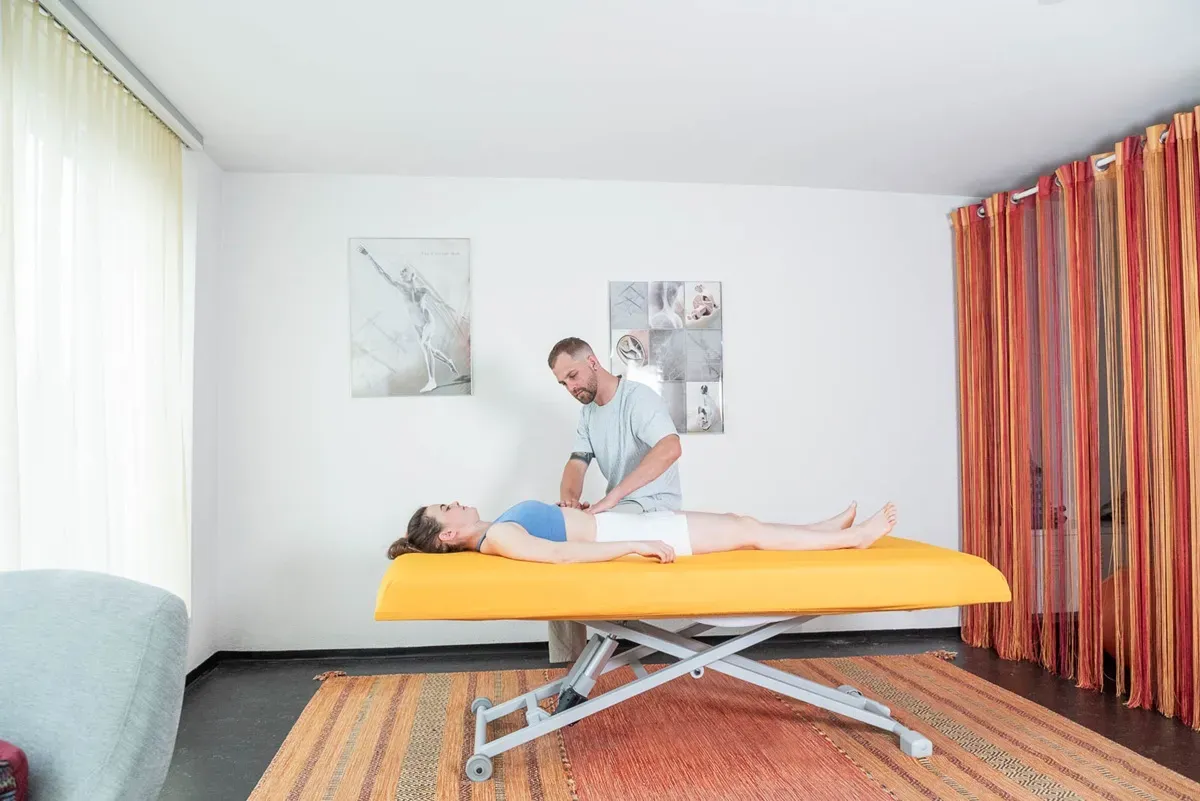
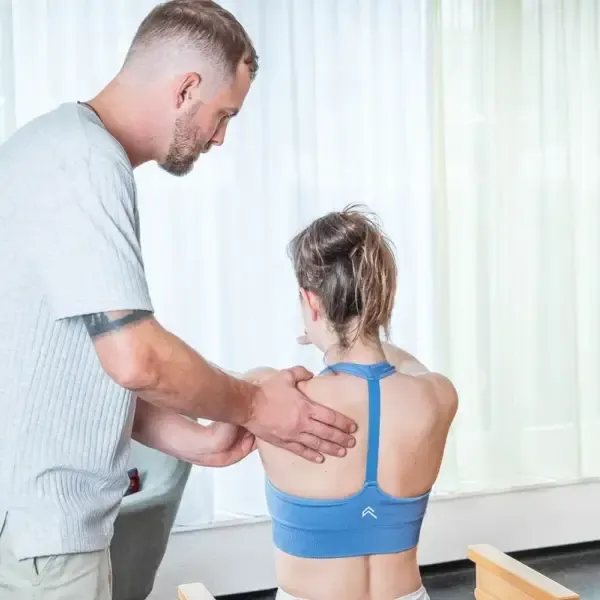
Manual bodywork with the aim of aligning the body as well as possible within gravity. The body becomes lighter and more economical — uneven loading is prevented, and pain, wear and injury decrease.
Three levels
What we work on
Functional work
Psychobiological work
The structure
The ten sessions
The treatment is built as a series of ten sessions. Each builds on the last, and each asks a central question. The exact course depends on you and your progress — the intervals between sessions vary too, depending on tissue quality, body awareness and how the process unfolds.
1 Full breathing
How does the structure of the shoulder and pelvic girdles affect breathing?
2 Connection to the ground
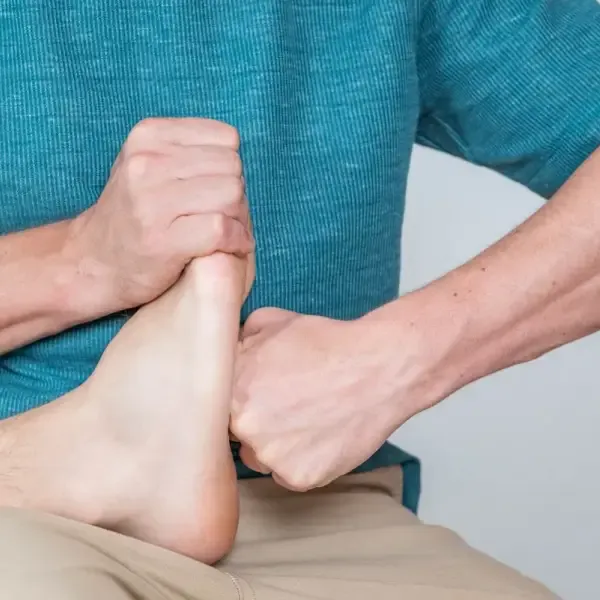
How is support for the body established through the feet and legs?
3 Length in the body
How can the spinal curves be lengthened and decompressed?
4 Openness in the pelvic floor
How is the inner midline supported through the inner legs and the pelvic floor?
5 Inner uprightness
How can inner uprightness be supported through the front of the body?
6 Letting the back breathe
How can inner uprightness be supported through the back of the body?
7 Freeing the head
How can the head and neck take in and integrate the changes in the body?
8–10 Integration
Integrating the changes across all body segments, and working wherever they have not yet fully arrived. From the tenth session onwards we continue integrating and transferring — maintaining and consolidating what has been achieved.
Fundamentals
What is fascia?
Fascia is connective tissue that runs through and wraps the entire body. It surrounds muscles, bones, nerves, organs and blood vessels, giving the body structure and shape. It is more than a covering: it takes part in movement, allows muscles to glide smoothly, and contributes to posture and stability.
Fascia consists mainly of collagen and elastin fibres, which give it both toughness and elasticity. It forms a continuous network throughout the body — essential not only for mechanics but also for signal transmission, metabolism and the distribution of water.
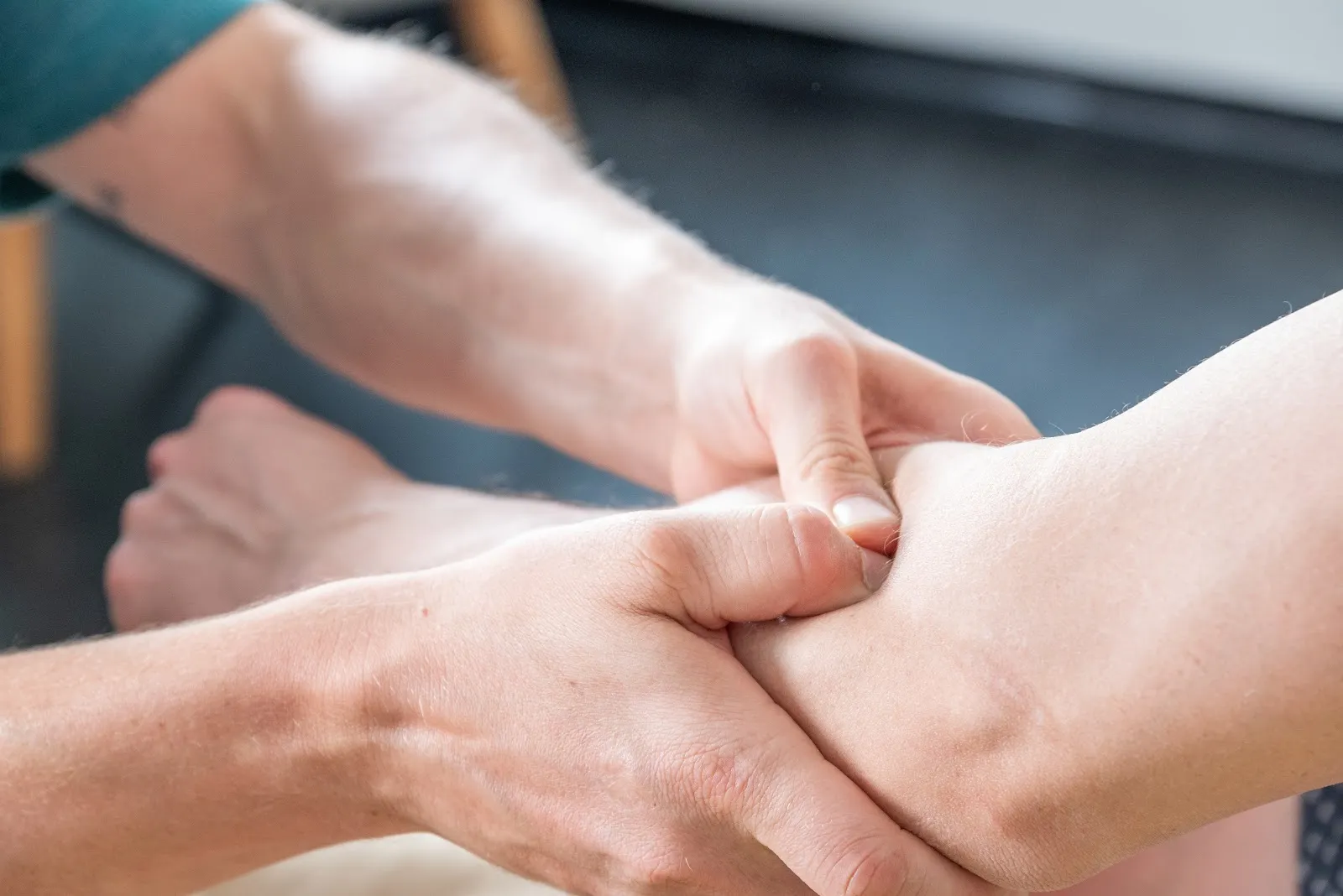
After injury, overuse, lack of movement or surgery, fascia can become stuck or hardened. That leads to pain, restricted movement and other complaints. Structural Integration releases these adhesions and restores natural mobility.
A look inside
What the work looks like

Fundamentals
Why gravity matters so much
The method aims to align the body so that it stands in harmony with gravity. A well-aligned structure does not experience gravity as a burden but makes use of it — movement becomes more efficient and takes less effort.
When the body is poorly aligned, the muscles have to work harder against gravity. That produces tension, pain and fatigue. A disorganised structure meets this challenge by building additional support systems: thickening and shortening of the connective tissue, which in turn can cause tension and chronic pain.
Healthy, released fascia brings the body into balance and supports greater mobility, freer breathing, upright posture, stability and lightness, broader body awareness, and the body's own capacity to heal.
Who it is for
Who is Structural Integration for?
People of any age who want to improve their posture, reduce pain and increase their physical wellbeing — with muscular tension, restricted movement, chronic pain or general stress relief. Equally for athletes wanting to optimise performance or prevent injury.
Complaints clients come with
- Stiff neck
- Back pain, scoliosis and disc herniation
- Shoulder complaints
- Knee pain
- Heel spur and plantar fasciitis
- Pelvic obliquity
- Postural strain from long hours of sitting
- Migraine
- Digestive issues
- Scar tissue
- Aftercare following accidents
What can change
- Improved posture and body alignment
- Reduced muscular tension and pain
- Greater mobility and flexibility
- Support during rehabilitation from injury
- Stress relief and relaxation
- Greater overall wellbeing and body awareness
- Optimised athletic performance
- Injury prevention through better body mechanics
History
Ida P. Rolf
Ida P. Rolf (1896–1979) founded the method of Structural Integration, also known as Rolfing®. In 1920 she became one of the first women to earn a doctorate in biochemistry and physiology at Columbia University in New York, and worked for many years in the research department of the Rockefeller Institute.
After suffering complaints in her thoracic spine and finding no satisfactory solution, she began researching alternative approaches. Her journey to California and an encounter with an osteopath there shaped her view of manual therapy for good.
She developed a new way of considering the human body in relation to gravity, recognising how much the optimal arrangement of the body's elements matters for wellbeing. From this came Structural Integration — a method that integrates the human structure harmoniously into gravity. Her work influenced therapists worldwide and led to the founding of the Rolf Institute of Structural Integration.